
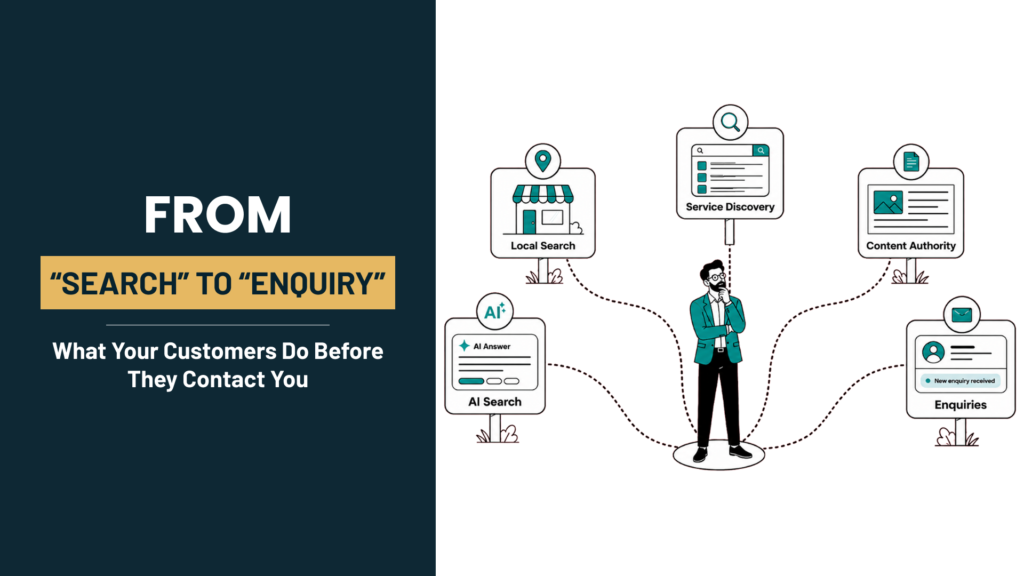
The Journey Starts Before You Can See It
Most marketing reports show a neat path: a person sees an ad or finds a page in Google, visits the website, submits a form, and becomes a lead. Real buying journeys rarely work that way. A prospective customer may start with a broad question during a commute, search again later from a laptop, review competitors, ask colleagues for recommendations, watch a short video, revisit a website through a branded search, and only then send an enquiry. The difficult part is that much of this decision-making happens outside the tools a business uses every day.
That hidden activity creates a dangerous measurement gap. If you only credit the final website visit or the final ad click, you can mistakenly conclude that the earlier interactions had no value. A strong Best Digital Marketing Company In Indore looks at the full sequence of discovery, evaluation, reassurance, and conversion, rather than judging channels only by the last action before a lead form is submitted.
The objective is not to chase perfect attribution, because no platform can observe every conversation, recommendation, or device switch. The objective is to build a reliable picture of how qualified prospects actually move toward an enquiry. Once that picture is clear, you can improve content, media investment, landing pages, follow-up, and reporting without overvaluing one channel at the expense of another.
Why the Linear Funnel No Longer Explains Buyer Behaviour
Traditional funnels suggest that people move smoothly from awareness to consideration and finally to purchase. In practice, buyers move forward, pause, compare, return to earlier questions, and often use several channels at once. A person might first discover an agency through a social post, then use Google to validate the agency, then visit a service page after seeing a remarketing message. Each interaction serves a different purpose, and none should be judged in isolation.
Search is especially important because it appears at several stages. Broad informational searches may signal early research, while searches for pricing, case studies, reviews, or service-specific terms usually indicate stronger commercial intent. Google Ads In Indore can reveal these changing needs through search-term reports, audience behavior, and conversion paths, helping marketers distinguish curiosity from a genuine buying signal.
This non-linear behaviour means that a customer may touch your brand repeatedly before they become visible in the CRM. They may have read a blog article weeks earlier, followed a social profile, and only later filled in a consultation form. If reporting gives all credit to the final source, it creates bad decisions: awareness content is cut, social activity is undervalued, and paid campaigns are scaled without understanding what created demand in the first place.
The Four Hidden Stages Between Discovery and Enquiry
The first hidden stage is problem recognition. The prospect has noticed a business challenge but may not yet know what solution they need. Their searches are broad, such as questions about traffic decline, lead quality, website performance, or advertising costs. Helpful educational content is valuable here because it gives the visitor language to define the problem and positions your brand as useful before it asks for a commitment.
The second stage is solution exploration. The buyer now understands the issue and begins comparing possible approaches. They may look at SEO, paid advertising, social media, web development, or lead qualification. This is where Social Media Marketing In Indore can help maintain familiarity through practical posts, short explanations, proof of work, and content that answers questions a prospect may not type into a search engine immediately.
The third stage is provider evaluation. At this point, prospects look for credibility: case studies, reviews, client examples, service scope, team expertise, response times, and evidence of results. They often revisit multiple sites and compare how confidently each business explains its process. The final stage is decision readiness, when the prospect wants an easy path to call, book a consultation, or submit a brief enquiry without being forced through a complicated form.
How Search, Social, and Paid Media Work Together
Search captures demand when a person is actively looking for an answer, but social channels often build the familiarity that makes a later search click more likely. A prospect who has seen useful posts or proof of results may recognize a brand name on a results page and choose it over unfamiliar alternatives. That is why social should not be measured only by immediate form submissions or direct website visits.
Social Media Marketing In Indore works best when it supports the research journey rather than simply publishing promotional messages. Educational carousels, short videos, customer stories, decision checklists, and answers to frequent questions can keep your brand present while the buyer compares options. These assets also provide useful material for sales teams to share after a first conversation, extending the journey beyond the initial website session.
Paid search plays a different but complementary role. Google Ads In Indore can capture high-intent searches immediately, test which messages resonate, and protect visibility for commercial terms while organic rankings mature. It can also support remarketing for visitors who explored key pages but were not ready to enquire. The important principle is consistency: the promise in an ad, the page experience, and the follow-up conversation should all reinforce the same value proposition.
What Traditional Analytics Misses
Standard analytics tools are useful, but they have limits. They cannot reliably see a prospect reading a competitor review, discussing options in a team meeting, seeing an untagged social mention, or switching from a personal mobile device to a work computer. Cookie restrictions, consent choices, and privacy controls also reduce what platforms can connect at the user level.
This does not mean measurement is pointless. It means reports should combine quantitative data with qualitative evidence. Use analytics to identify patterns in sessions, channels, assisted conversions, landing pages, and returning visitors. Then add customer surveys, sales-call notes, CRM fields, and post-conversion interviews to understand the interactions that software cannot observe. A Best Digital Marketing Company In Indore should be comfortable presenting both the certainty and the limitations of its attribution model.
For example, include a short field in enquiry forms asking, ‘How did you first hear about us?’ Train sales teams to ask a similar question naturally on discovery calls. The answer is not always perfectly accurate, but repeated responses create useful directional insight. When several good leads say they first discovered you on social or through a blog, that evidence should influence how you assess those channels.
Build a Practical Measurement Framework
Start with clean campaign tracking. Every paid social post, email, partner referral, and ad should use consistent UTM parameters so source, medium, campaign, and creative can be reviewed in one reporting environment. Establish naming conventions before campaigns launch; inconsistent labels make data difficult to compare and can hide successful efforts.
Next, connect your website analytics, advertising platforms, and CRM wherever possible. The website should record meaningful actions such as form starts, form submissions, click-to-call events, calendar bookings, pricing-page visits, and downloads. The CRM should record whether a lead was contacted, qualified, quoted, won, or lost. Google Ads In Indore becomes far more useful when offline outcomes such as qualified leads or closed deals are returned to the ad platform for optimization.
Finally, define an attribution approach that suits the business. A simple model may look at first touch, lead-creation touch, and last touch together. A more mature program may use data-driven attribution alongside assisted-conversion reporting. The goal is not a single perfect answer; it is a repeatable method for recognizing channels that introduce, influence, and convert valuable prospects.
Use Content to Support the Unseen Research Phase
Prospects often need reassurance before they make contact. They want to understand what the service includes, whether it applies to their industry, how long results may take, what the process looks like, and what risks they should consider. If this information is hard to find, visitors leave to continue researching elsewhere, often on a competitor website that explains the same questions more clearly.
Build a content library around real questions from sales calls, chat conversations, and search queries. Include practical articles, service explainers, comparison pages, FAQs, case studies, and process guides. Each asset should have a clear purpose: educate early researchers, assist evaluators, or remove friction for decision-ready visitors. Where appropriate, link naturally to relevant services such as Lead Generation Services In Indore so a reader who needs help can move from learning to action.
Content should not force an enquiry too early. A visitor researching options may be more willing to download a checklist, review a case study, or read a guide than schedule a call immediately. These smaller actions are valuable because they reveal interest and create opportunities for thoughtful follow-up. Over time, the collection of content interactions can show which topics commonly precede high-quality leads.
Identify High-Intent Moments and Drop-Offs
Not every visit deserves the same urgency, but some combinations of behavior indicate strong intent. A visitor who reads a service page, visits a pricing or case-study page, returns within a few days, and clicks a phone number is behaving differently from someone who reads one introductory article and leaves. Use event tracking and audience segments to identify these patterns without assuming that every pageview is equally valuable.
Review your conversion path regularly. Are visitors leaving after arriving on a generic homepage from a highly specific search? Are they reaching the contact page but abandoning a long form? Are they reading detailed service content without seeing a clear next step? These are signs that the journey is not aligned with what the prospect needs at that moment. Lead Generation Services In Indore can help design clearer qualification paths, simpler forms, and follow-up systems around these observed behaviours.
Also examine time-to-conversion. Some services have a short decision cycle, while others require several weeks or months of evaluation. If your reporting window is too short, it will undervalue early interactions that assisted later revenue. Matching attribution windows to the actual sales cycle creates more credible conclusions and prevents premature campaign decisions.
Turn Insights Into Better Marketing Decisions
Once you understand the journey, use it to improve decisions across channels. If paid search brings the most decision-ready visitors, protect budget for high-intent terms and build pages that precisely match those searches. If educational content frequently appears early in journeys that later close, keep updating and promoting it rather than treating it as a low-conversion asset. If social activity improves branded search and repeat visits, assess it using assisted metrics as well as direct leads.
A Best Digital Marketing Company In Indore should turn journey data into a coordinated plan rather than a list of disconnected reports. The SEO team can use paid search query data to prioritize content. The paid team can use organic landing-page insights to improve ad destinations. The social team can repurpose frequently asked questions into useful posts. The sales team can feed objections and qualification insights back to marketers, improving messages and targeting over time.
This approach also makes budget conversations more productive. Instead of arguing about whether one channel deserves all the credit, teams can discuss which combination of touchpoints is most likely to produce qualified revenue. That is a more realistic basis for investment because it reflects how people actually research and decide.
Conclusion: Measure the Journey, Not Just the Last Click
The period between a first Google search and a final enquiry contains most of the decision-making that determines whether a prospect chooses you or a competitor. Although no tool can capture every interaction, a combined approach using analytics, CRM outcomes, tagged campaigns, sales feedback, and customer research can make this hidden journey visible enough to improve it.
Focus on the roles each channel plays: search captures active demand, social builds familiarity and trust, content answers questions, paid media accelerates visibility, and a clear website experience turns readiness into an enquiry. With Social Media Marketing In Indore, Google Ads In Indore, and strong measurement working together, businesses can evaluate marketing by its contribution to qualified opportunities and revenue—not only by the last click before a form submission.
The result is a more accurate picture of customer behaviour and a more effective marketing system. Rather than optimizing isolated channels, you can design a connected journey that helps prospects move confidently from their first question to a meaningful sales conversation.


