
Introduction
Keyword research used to mean chasing exact-match search volume in a spreadsheet. In 2026, with AI reshaping how people search — and how search engines interpret queries — that approach alone falls short. Here’s how the process has genuinely changed.
From Exact-Match Keywords to Search Intent
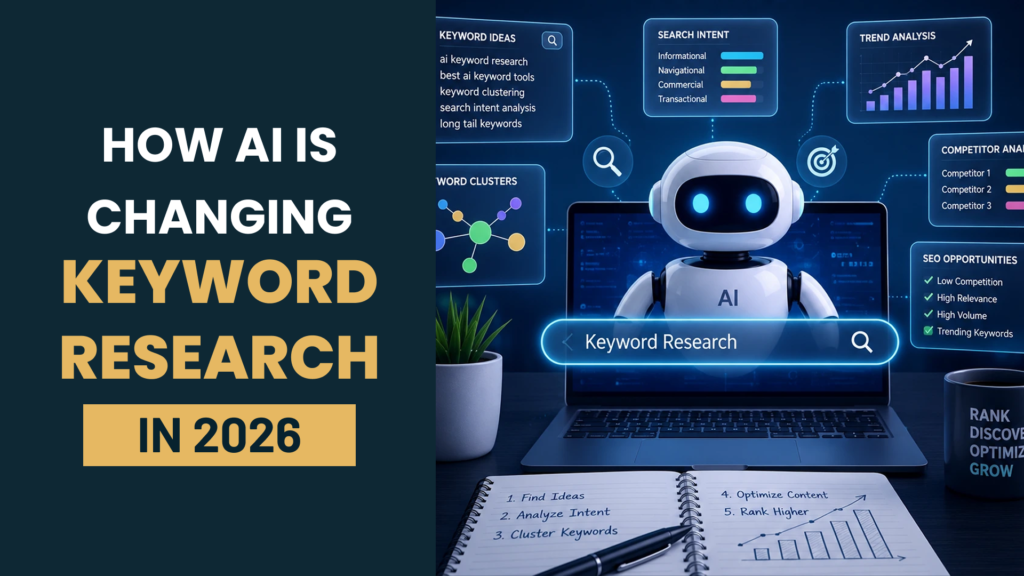
AI-powered search engines interpret the meaning behind a query, not just the literal words. This means keyword research now needs to map out intent and related questions, not just isolated keyword variations.
AI Tools Are Speeding Up Research, Not Replacing Strategy
AI-assisted tools can quickly generate keyword clusters, related questions, and content gaps far faster than manual research alone — but they still require human judgment to prioritise what’s genuinely relevant to the business.
Conversational and Long-Tail Queries Matter More
As more searches happen through voice assistants and AI chat interfaces, natural, conversational phrasing is becoming just as important to target as traditional short-tail keywords.
Semantic Relevance Over Keyword Density
- Covering a topic comprehensively matters more than repeating one exact phrase
- Related terms and synonyms strengthen topical relevance for AI models
- Content should answer the full range of questions around a topic, not just one
What Businesses Should Actually Do Differently
Instead of chasing individual keywords, build content around complete customer questions and pair it with strong on-page structure.
A data-informed SEO strategy that blends AI-assisted research with human insight into real customer behaviour consistently outperforms either approach alone.
Key Takeaways
- Keyword research in 2026 prioritises search intent over exact-match phrases.
- AI tools accelerate research but still require human strategic judgment.
- Conversational, long-tail queries are increasingly important to target.
- Semantic relevance and topic depth matter more than keyword repetition.
- Combining AI-assisted tools with real customer insight produces the strongest results.
Frequently Asked Questions
Are traditional keyword research tools still useful in 2026?
Yes, tools measuring search volume and competition remain useful, but they now work best alongside intent and semantic analysis rather than as a standalone approach.
Do I need to target voice search keywords separately?
Not entirely separately — conversational, question-based content tends to naturally perform well for both voice and AI chat search.
Can AI tools fully automate keyword research?
AI tools can significantly speed up the process, but human judgment is still needed to align keyword choices with actual business goals and audience.
What’s the risk of keyword stuffing in 2026?
It remains a real risk — both traditional search engines and AI tools penalise unnatural repetition in favour of genuinely comprehensive, well-written content.
How has search intent classification changed keyword strategy?
It’s shifted focus from ranking for isolated terms to building content clusters that comprehensively address informational, navigational, and transactional intent together.
Conclusion
AI hasn’t eliminated keyword research — it’s made it smarter, faster, and more focused on genuine intent. Businesses that adapt their strategy toward comprehensive, intent-driven content will stay ahead as search continues to evolve.
Want a keyword strategy built for how people actually search in 2026? Get in touch with DigitalVia Technologies.


