
Introduction
Publishing random blog posts one at a time rarely builds real search authority. Search engines increasingly reward websites that demonstrate deep, organised expertise on a topic — and that’s exactly what a content cluster strategy is built to do.
Here’s how the pillar-and-cluster model works, and how to build one without a massive content team.
What Is a Content Cluster?
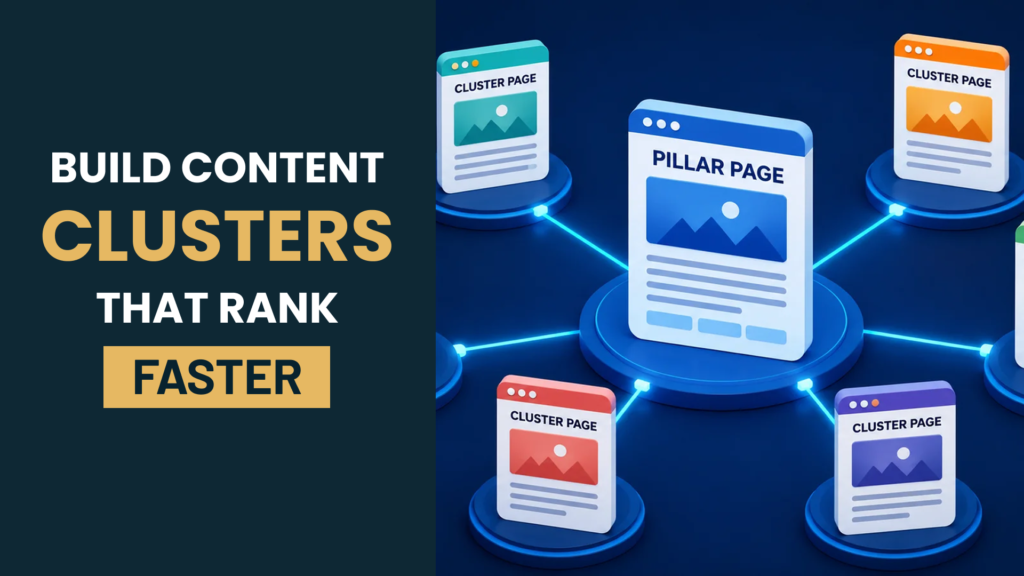
A content cluster is a group of related articles (the ‘clusters’) all linking back to one comprehensive ‘pillar’ page on a broader topic. Together, they signal to search engines that your site covers a subject in real depth, not just a single keyword.
Step 1: Choose a Broad Pillar Topic
Pick a topic broad enough to support 8-12 related articles, but specific enough to be genuinely useful — for example, ‘Digital Marketing for Small Businesses’ as a pillar, with clusters on SEO, social media, and paid ads.
Step 2: Map Out Supporting Cluster Topics
- List every sub-question a customer might ask about the pillar topic
- Group related questions into individual blog post ideas
- Prioritise clusters around topics with real search demand
Step 3: Interlink Everything Strategically
Every cluster article should link back to the pillar page, and the pillar page should link out to each cluster article. This internal linking structure is what actually builds topical authority in the eyes of both Google and AI search tools.
Step 4: Keep the Cluster Updated
A content cluster isn’t a one-time project — refreshing older cluster articles as facts or trends change keeps the entire structure relevant and competitive over time.
Working with an SEO agency can help prioritise which clusters to build first based on real competition and opportunity data.
Key Takeaways
- Content clusters organise related articles around one comprehensive pillar page.
- This structure signals topical authority to both Google and AI search engines.
- Internal linking between the pillar and clusters is what makes the model work.
- Cluster topics should be based on real customer questions, not guesswork.
- Regularly updating cluster content keeps the whole structure competitive.
Frequently Asked Questions
How many articles should a content cluster have?
Most effective clusters include 8 to 12 supporting articles around one pillar page, though this can vary based on topic complexity.
Do content clusters help with AI search visibility too?
Yes. The depth and structure of a well-built cluster make it easier for AI search tools to understand and trust your coverage of a topic.
How long does it take to see ranking improvement from clusters?
Most businesses start seeing meaningful ranking movement within three to six months of consistently publishing and interlinking cluster content.
Should every blog post be part of a cluster?
Not necessarily, but organising the majority of your content strategy around clusters generally produces stronger, faster results than isolated posts.
Can a small business realistically maintain a content cluster?
Yes, especially by starting with one pillar topic and building it gradually over several months rather than all at once.
Conclusion
Content clusters turn scattered blog posts into a genuine authority-building system. Start with one well-chosen pillar topic, build outward with real customer questions, and interlink consistently — the ranking gains tend to compound over time.
Need help planning your first content cluster? Reach out to DigitalVia Technologies for a content strategy built around real ranking data.


